
About Keploy
Keploy is an API and integration testing tool for developers that generates tests and data mocks from recorded traffic. It uses eBPF to capture requests at the network layer, so no code changes or SDKs are needed, and it works with any language or framework.
Key features
- 01Records API calls without code changes
- 02Captures database and queue interactions for replay
- 03Expands coverage using OpenAPI schemas and AI
- 04Unified reports for API and integration coverage
- 05Runs tests from the CLI and CI pipelines
Use cases
- 01Generating regression tests for APIs with little test coverage
- 02Running integration tests offline without external dependencies
- 03Validating API behavior inside CI pipelines
Configuration
Remote servers need no local install. Pick your client, then copy the config or install in one click.
https://api.keploy.io/client/v1/mcpclaude mcp add --transport http keploy https://api.keploy.io/client/v1/mcp{"mcpServers":{"keploy":{"type":"http","url":"https://api.keploy.io/client/v1/mcp"}}}Open in Cursor{"servers":{"keploy":{"type":"http","url":"https://api.keploy.io/client/v1/mcp"}}}Open in VS Code{"mcpServers":{"keploy":{"type":"http","url":"https://api.keploy.io/client/v1/mcp"}}}{"mcpServers":{"keploy":{"serverUrl":"https://api.keploy.io/client/v1/mcp"}}}Run commands in a terminal; paste JSON into the client’s MCP config and restart. Servers that need sign-in will prompt on first connect.
https://api.keploy.io/client/v1/mcpAuth requiredTools
Details
From the project README

⚡️ API tests faster than unit tests, from user traffic ⚡️
🌟 The must-have tool for developers in the AI-Gen era for 90% test coverage 🌟





Keploy is a developer‑centric API and integration testing tool that auto‑generates tests and data‑mocks faster than unit tests.
It records API calls, database queries, and streaming events — then replays them as tests. Under the hood, Keploy uses eBPF to capture traffic at the network layer, but for you it’s completely code‑less and language‑agnostic.
🐰 Fun fact: Keploy uses itself for testing! Check out our swanky coverage badge:

Key Highlights
🎯 No code changes
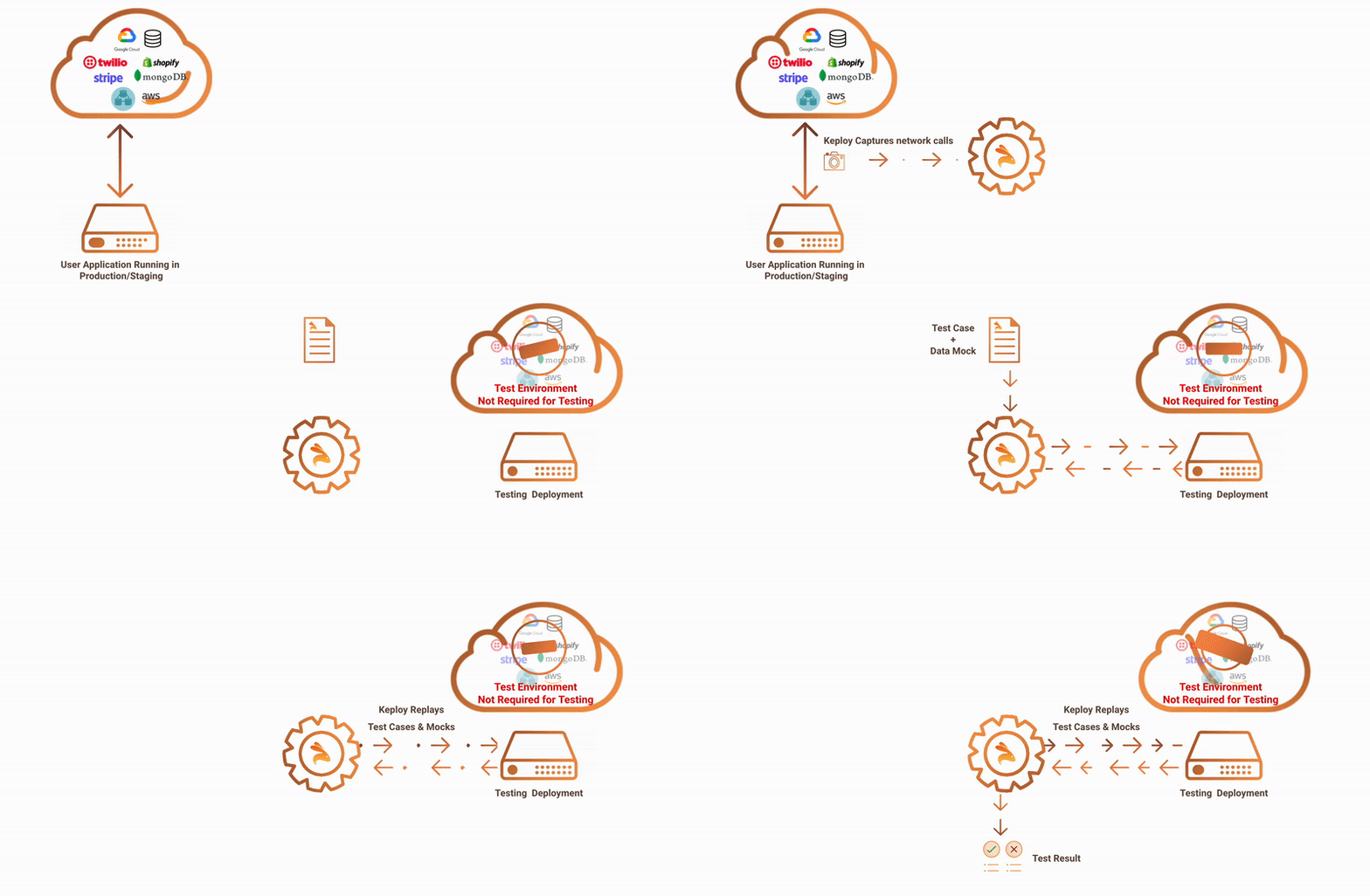
Just run your app with keploy record. Real API + integration flows are automatically captured as tests and mocks. (Keploy uses eBPF under the hood to capture traffic, so you don’t need to add any SDKs or modify code.)
📹 Record and Replay complex Flows
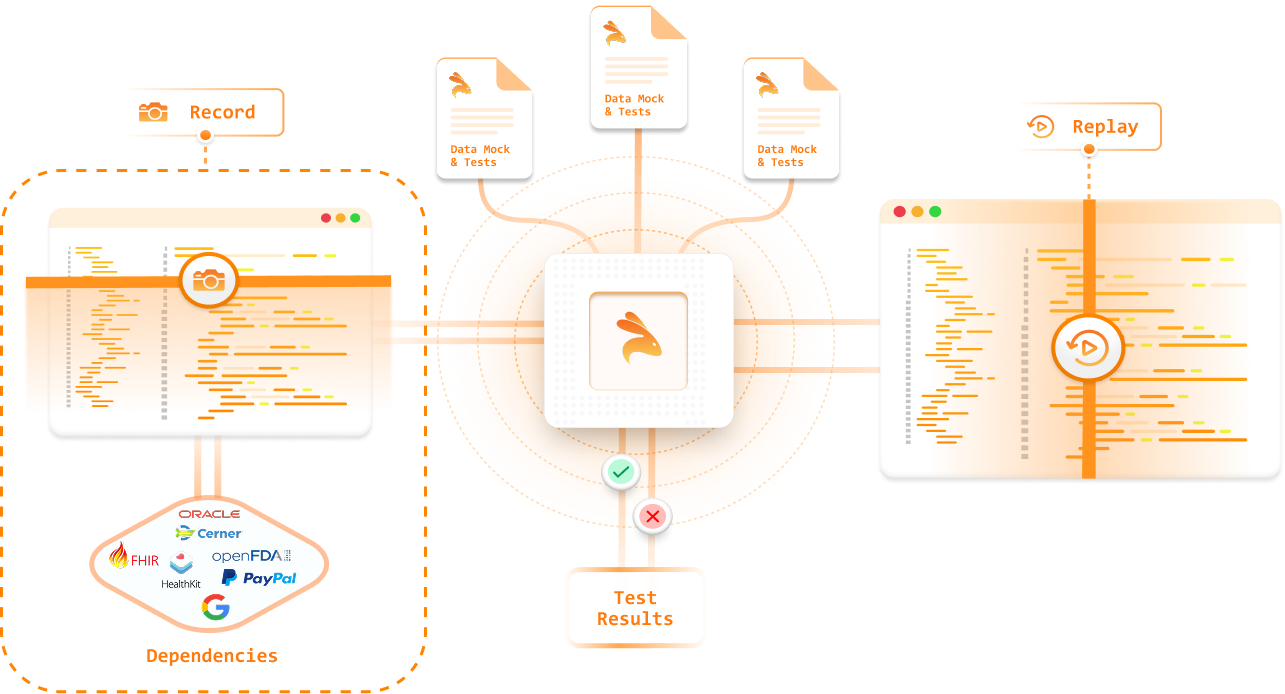
Keploy can record and replay complex, distributed API flows as mocks and stubs. It's like having a very light-weight time machine for your tests—saving you tons of time!
👉 Read the docs on record-replay
🐇 Complete Infra‑Virtualization (beyond HTTP mocks)
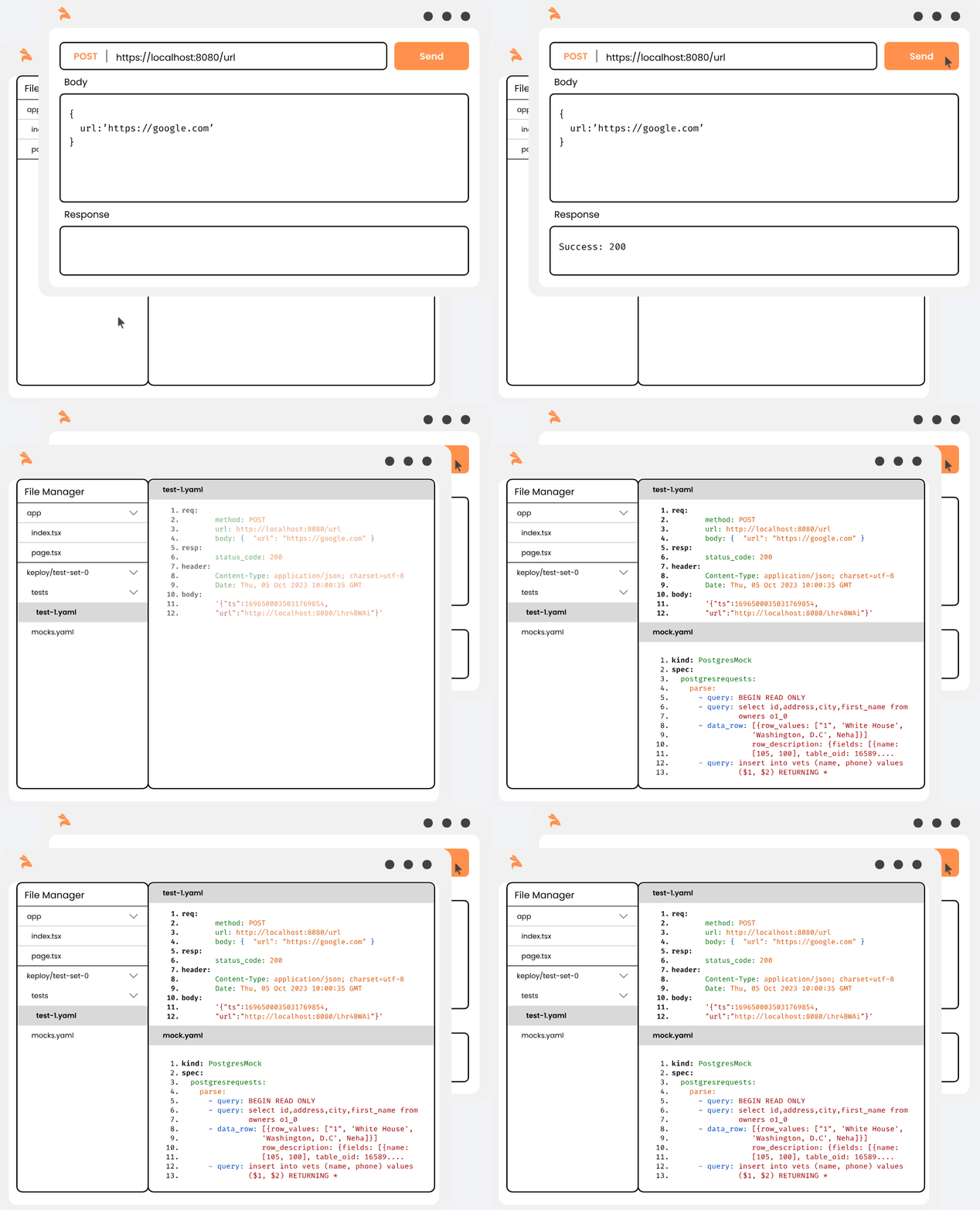
Unlike tools that only mock HTTP endpoints, Keploy records databases (Postgres, MySQL, MongoDB), streaming/queues (Kafka, RabbitMQ), external APIs, and more.
It replays them deterministically so you can run tests without re‑provisioning infra.
👉 Read the docs on infra virtualisation
🧪 Combined Test Coverage
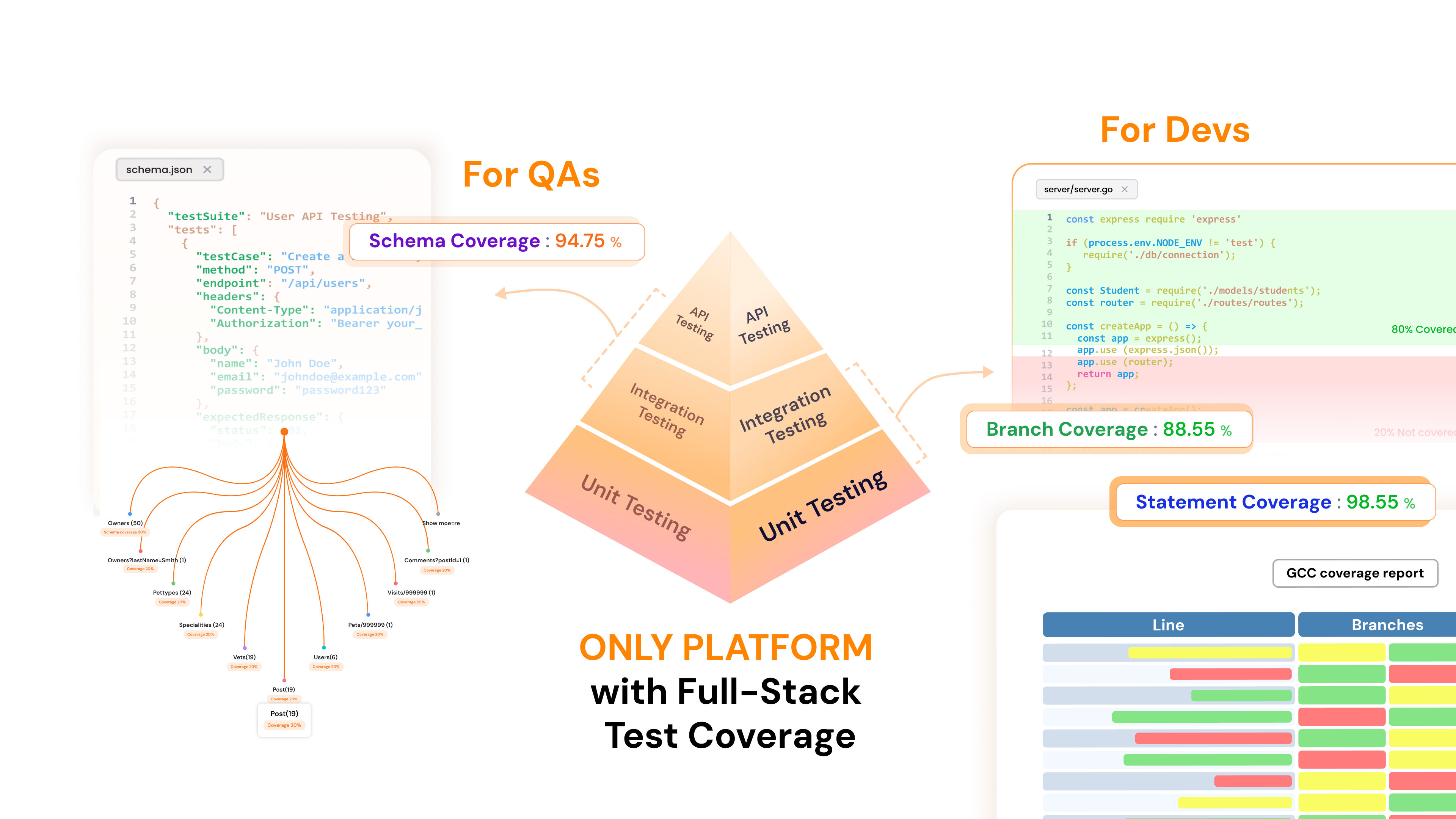
If you’re a developer, you probably care about statement and branch coverage — Keploy calculates that for you.
If you’re a QA, you focus more on API schema and business use‑case coverage — Keploy calculates that too. This way coverage isn’t subjective anymore.
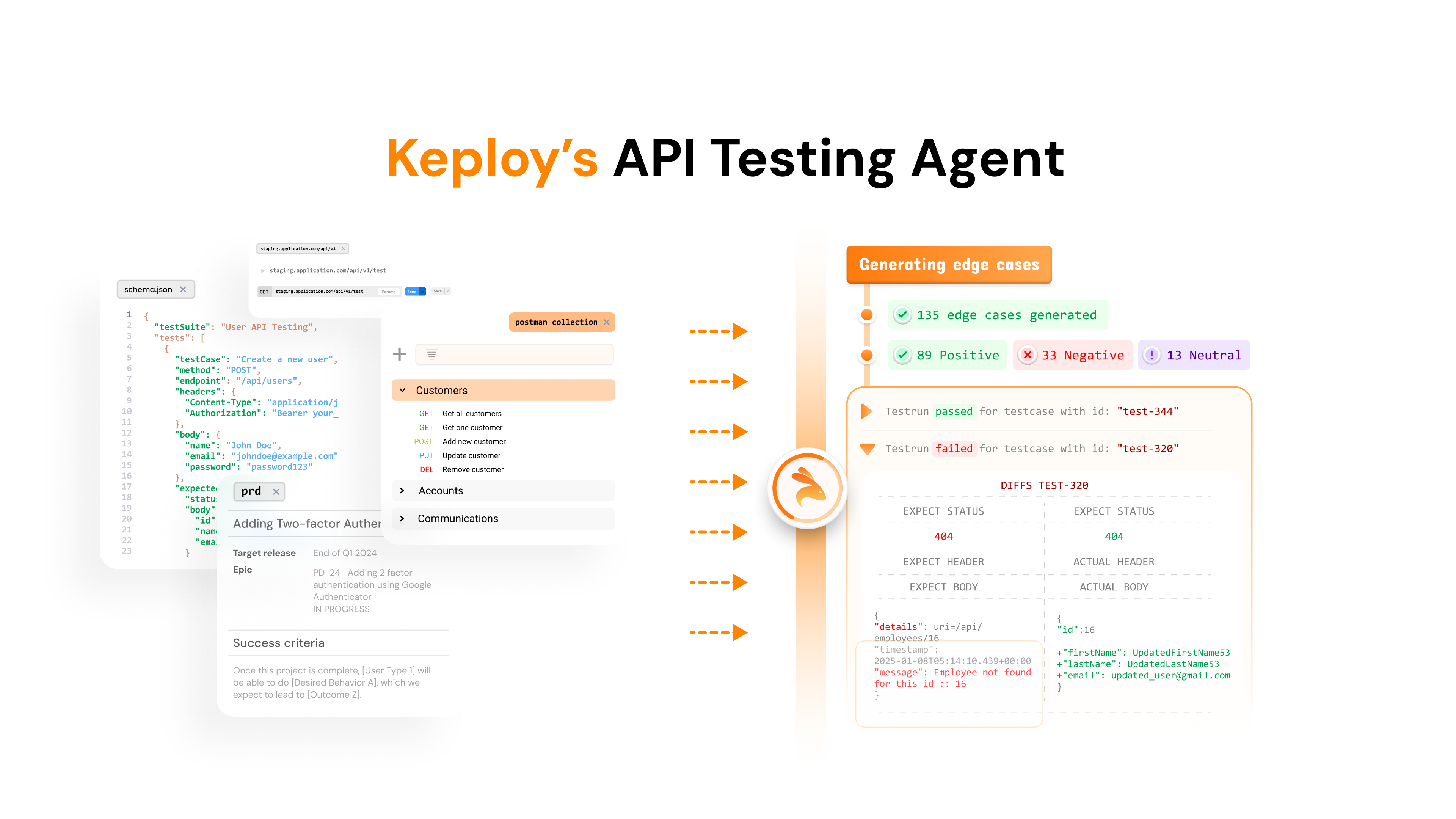
🤖 Expand API Coverage using AI
Keploy uses existing recordings, Swagger/OpenAPI Schema to find: boundary values, missing/extra fields, wrong types, out‑of‑order sequences, retries/timeouts.
This helps expand API Schema, Statement, and Branch Coverage.
Other Capabilities
-
🌐 CI/CD Integration: Run tests with mocks anywhere you like—locally on the CLI, in your CI pipeline (Jenkins, Github Actions..) , or even across a Kubernetes cluster. Read more
-
🎭 Multi-Purpose Mocks: You can also use Keploy-generated Mocks, as server Tests!
-
📊 Reporting: Unified reports for API, integration, unit, and e2e coverage with insights directly in your CI or PRs.
-
🖥️ Console: A developer-friendly console to view, manage, and debug recorded tests and mocks.
-
⏱️ Time Freezing: Deterministically replay tests by freezing system time during execution. Read more
-
📚 Mock Registry: Centralized registry to manage, reuse, and version mocks across teams and environments. Read more
Quick Start
1. Install Keploy Agent
curl --silent -O -L https://keploy.io/install.sh && source install.sh
2. Record Test Cases
Start your app under Keploy to convert real API calls into tests and mocks.
keploy record -c "CMD_TO_RUN_APP"
Example for Python:
keploy record -c "python main.py"
3. Run Tests
Run tests offline without external dependencies.
keploy test -c "CMD_TO_RUN_APP" --delay 10
Resources
- 📘 Installation
- 🏁 QuickStarts
Languages & Frameworks (Any stack)
Because Keploy intercepts at the network layer (eBPF), it works with any language, framework, or runtime—no SDK required.
Note: Some of the dependencies are not open-source by nature because their protocols and parsings are not open-sourced. It's not supported in Keploy enterprise.


Questions?
Book a Live Demo / Enterprise Support
Want a guided walkthrough, dedicated support, or help planning enterprise rollout?


Prefer a calendar invite? Mention your availability in the email—we’ll send a calendar invite right away.
Documentation & Community
- 📘 Documentation — Explore the full docs
- 💬 Slack Community — Join the conversation
- 📜 Contribution Guidelines
- ❤️ Code of Conduct
- 📢 Blog — Read articles and updates
Contribute & Collaborate
Whether you're new or experienced, your input matters. Help us improve Keploy by contributing code, reporting issues, or sharing feedback.
Together, let's build better testing tools for modern applications.
Comments
New to MCP?
From what the protocol is to installing your first server, these answers cover most first questions.
An open protocol that defines how AI applications connect to external tools and data in a uniform way. Clients talk to the model; MCP servers provide tools, resources and prompt templates. They exchange standard messages, so one server can be reused by many clients.