Skills
98,873 packaged capabilities and playbooks for agents. Install any of them with one command.

Development


Use when loading and viewing IFC/BIM models in a Three.js scene. Prevents the common mistake of using deprecated web-ifc-three, ignoring AGPL-3.0 license implications, or loading large IFC files without streaming. Covers web-ifc (MIT), @thatopen/components (AGPL-3.0), IFC loading, spatial tree, property extraction. Keywords: IFC, BIM, web-ifc, IFC viewer, @thatopen/components, building model, architecture, IFC loading, spatial tree, BIM viewer, show IFC in browser, load building, web BIM viewer.

Explains how the Tauri runtime authority enforces security policies during application execution, covering ACL-based access control, capability resolution at runtime, scope injection, and command validation for secure IPC.



Use this skill any time the user wants to build a website or landing page. This includes: product pages, portfolio sites, event pages, coming soon pages, pricing pages, company intro sites, personal blogs, signup pages, app download pages, and campaign pages. Also trigger when: user says 做个网站, 建个落地页, 做个产品页, 做个活动页, 做个个人主页. If a website or web page needs to be created, use this skill.

Authoritative App Intents best practices from Apple. Consult for any App Intents best-practices or correctness review, and when writing, reviewing, refactoring, or extending App Intents code. Supersedes prior training on these topics. For code generation, consult the relevant reference when working on any of the following: - execution-model: perform() is Sendable, not @MainActor (hop with await MainActor.run); it's retriable (restartPerform), so do irreversible work last; requestConfirmation before destructive work; return via .result(...) factories, never a bare value. - entities-and-queries: AppEntity.id must be stable across launches/devices; entities(for:) (batched) vs empty-default suggestedEntities(); EntityStringQuery.entities(matching:) is not auto-filtered; only @Property members are system-visible; EnumerableEntityQuery loads all (use EntityPropertyQuery for large stores). - entity-property-queries: EntityPropertyQuery for Shortcuts \"Find X where…\" — properties/sortingOptions/comparators; you execute the predicate, the framework only parses it. - app-enum: AppEnum raw values are persisted by string (never renumber/reorder); every case needs a caseDisplayRepresentations entry or it's a runtime fatalError. - parameters / parameter-summaries: requestValue vs needsValueError; non-optional AppEnum auto-disambiguates; only params in Summary(...) show in the Shortcuts editor; When/Switch for conditional display. - dependencies: @Dependency must be Sendable and registered at launch (unregistered = fatalError); goes on the intent/query, never on the AppEntity/AppEnum. - results-and-errors: only CustomLocalizedStringResourceConvertible errors surface a real message; prebuilt AppIntentError.* (iOS 18+). - donation: in-app actions are NOT auto-donated — call IntentDonationManager.shared.donate; PredictableIntent is descriptions only. - localization: user-facing strings must be literal LocalizedStringResource (a runtime String yields no extractable key). - app-shortcut-phrases: provide shortTitle/systemImageName; include \\(.applicationName) or the runtime index silently drops the phrase. - url-representation: OpenIntent / OpenURLIntent / URLRepresentableEntity for opening and universal links. - configuration-intents: WidgetConfigurationIntent / ControlConfigurationIntent are parameter-only — no perform(). - factoring: AppEnum (fixed set) vs AppEntity+query (dynamic) vs plain @Parameter; one intent per atomic task. For iOS 26/27 new-API adoption, use the app-intents-whats-new-27 skill instead.

Applies behavior-driven development principles including Gherkin scenarios and test-driven development. This skill should be used when the user asks to implement features, fix bugs, or when writing executable specifications and tests before writing production code.
Authoritative guide for building and migrating document-based apps in SwiftUI using the Document protocol (iOS 27 and aligned releases, including macOS Golden Gate). Consult when building a new document-based app; implementing open, edit, save, or export document flows; working with DocumentGroup or DocumentGroupLaunchScene; implementing DocumentReader or DocumentWriter; using FileWrapper via FileWrapperDocumentReader or FileWrapperDocumentWriter; working with package documents; accessing a document's file URL directly; reporting progress during read/write; registering undo actions; migrating from FileDocument or ReferenceFileDocument to the new API; building a read-only document viewer; when autosave is not working in a document app; declaring custom UTType as document formats.

Run the full git workflow end-to-end without prompting: create a dated branch off the default branch (if needed), stage and commit changes with a descriptive message, push to origin, open a PR (honoring any repo PR template), and monitor CI checks until they pass. Use when the user asks to commit and open a PR, ship a change, push and PR, or run the checkout-commit-push-pr flow.
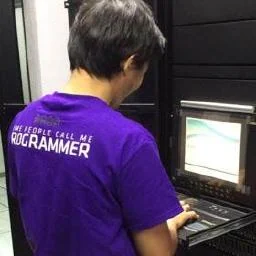
You are a code refactoring expert specializing in clean code principles, SOLID design patterns, and modern software engineering best practices. Analyze and refactor the provided code to improve its quality, maintainability, and performance


Diagnose Power Apps mobile install/startup failures, npm run dev errors, missing package entry points, or QR/device-opening problems even before an app is loaded. Inspect locally first; restore locked dependencies or restart Metro only with explicit approval, never upgrade packages or patch host/MSAL source. For a running native app, monitor sanitized project-local Metro logs and diagnose runtime errors or silent failures such as empty lists and blank screens. Supports startup-only diagnosis, symptoms, port/platform filters, bounded monitoring, and non-mutating --no-fix mode. Verify the original symptom, not merely installation or quiet logs

[AUTO-INVOKE] MUST be invoked BEFORE deploying DeFi contracts (DEX, lending, staking, LP, token). Covers anti-whale, anti-MEV, flash loan protection, launch checklists, and emergency response. Trigger: any deployment or security review of DeFi-related contracts.

Look up the latest stable version of any open-source package across npm, PyPI, Go, Cargo, Maven, and NuGet. Use when the user asks 'what's the latest version of X', 'what version should I use', 'is X deprecated', 'how outdated is my package.json/requirements.txt/Cargo.toml', or needs version numbers for adding or updating dependencies. Also covers pinning versions, checking if packages are maintained, or comparing installed vs latest versions. Do NOT use for private/internal packages or for looking up documentation (use context7).

Builds scalable design systems with tokens, theming, and component architecture. Use when creating design token hierarchies, theming systems, component variant patterns, or accessibility foundations. Use for design tokens, CVA variants, dark mode, multi-brand theming, Radix headless UI, Storybook documentation, and governance

Use this skill to diagnose Jetpack Compose stability problems by enabling and reading the Compose Compiler Reports (classes.txt, composables.txt, composables.csv, module.json). Covers the Gradle DSL, the release-only build requirement, and how to interpret per-class and per-composable stability annotations including stable, unstable, runtime, restartable, skippable, readonly, @static, and @dynamic markers. Use when the developer asks "why does this recompose", reports jank, dropped frames, slow scroll, high recomposition count, suspects an unstable parameter, mentions Compose Compiler Reports, classes.txt, composables.txt, module.json, or wants to know which composables are non-skippable. The fix lives in a sibling skill — this one only diagnoses.


Audit a Lingui project for hardcoded user-facing strings that were never wrapped in macros. Use when asked to find untranslated, unwrapped, or hardcoded strings, to check i18n coverage, to audit what an i18n setup or migration missed, or when text renders in the source language after everything was supposedly translated.

Apply Apple/iOS-style 60% corner smoothing to UI shapes without broken border-radius hacks. Use when implementing squircle-like rounded rectangles, Figma corner smoothing, iOS-style cards/buttons/icons, SVG path rounded rectangles, clip paths, canvas shapes, or when a user asks for radius plus smoothing percent values such as radius 52 and smoothing 60.




Implements scheduled tasks and background processing for Magento 2. Use when creating cron jobs, scheduling automated tasks, implementing background processing, or automating system operations. Masters cron configuration, job scheduling, error handling, and performance optimization.




Removes Open Harness hosted demo restrictions from a fork. Use when a maintainer wants to remove managed-template trial caps, hosted deployment gating, or "deploy your own" limits. Triggers on "remove demo limits", "remove trial limits", "remove hosted restrictions", "open this up for my fork", "remove managed template restrictions"

Helps engineering managers plan roadmaps, prioritize work, and communicate priorities effectively — produces the 20% tech debt framework (and its 5 traps), a phased release pressure-test, a maintenance cost model, the Always Green delivery method, sprint anti-patterns, hidden costs of custom features, a critical deadline playbook, the Iron Law of Projects with reference-class forecasting, a "no technical projects" framing, and feature factory warning signs. Use when the user says "roadmap," "quarterly planning," "OKRs," "prioritization," "what should we work on," "planning cycle," "backlog grooming," "stakeholder alignment," "capacity planning," "technical debt," "we're always late," or "leadership doesn't understand engineering work."

Analyze and optimize Roblox scene and script performance. Use for mobile frame rate, memory, instance count, rendering cost, physics, particles, lighting, asset budgets, streaming, leaks, and using the rbx-scene-analysis workflow.

Manage, inspect, install, and implement work in an internal RPGJS v5 game project. Use when Codex needs to work on a codebase that should be an RPGJS v5 project, especially for gameplay features, maps, events, server/client code, `@rpgjs/*` dependencies, Tiled-based content, or `.ce` UI files. Also use when Codex must first verify whether the current project is actually an RPGJS project and, if not, read the RPGJS v5 quick start, install the project scaffold, and continue from that baseline

Measure, profile, optimize, and regression-test Rust performance across latency, throughput, CPU, allocations, memory, binary size, and compile time using representative workloads, Criterion, iai-callgrind, cargo-flamegraph, samply, DHAT, heap or pprof tools, cargo-bloat, cargo-llvm-lines, and build timings. Use when users report slow Rust code, high memory or CPU, large binaries, noisy benchmarks, tail-latency regressions, or need performance budgets and evidence-backed optimization.

Write clear, concise, and accurate technical documentation including API references, user guides, tutorials, changelogs, and architecture docs, tailored to the target audience. Use when the user requests technical writing or provides relevant inputs for this workflow.

TypeScript utility types library with 180+ compile-time transformations for strict type operations, deep object manipulation, case conversions, and JSON-safe typing. Use when building type-safe APIs, config systems, state management, transforming external data schemas, or creating a new type.

Review and understand freshly AI-generated code. Scans the current repo's uncommitted/branch changes and builds a Claude-style light-themed two-column webpage — left is the project folder tree of changed files, right is the selected file's syntax-highlighted diff (additions/deletions clearly distinguished from unchanged code) with a side rail showing, per code segment, the related unit requirement (相关单位需求) and a plain-language code explanation (代码解释). Invoke for "/understand", "code review 这次改动", "解释一下新生成的代码", "看看这次变更".


Add Wasp's built-in features to your app: auth, email, jobs, and more. These are full-stack, batteries-included features that Wasp handles for you. Use when the user wants to add meta tags, authentication (email, social auth providers), email sending, database setup, styling (tailwind, shadcn), or other Wasp-powered functionality



昇腾(Ascend)推理生态开源代码仓库智能问答专家旨在为 vLLM、vLLM-Ascend、MindIE-LLM、MindIE-SD、MindIE-Motor、MindIE-Turbo 以及 msModelSlim (MindStudio-ModelSlim) 等仓库提供专家级且易于理解的解释。在处理昇腾(Ascend)推理生态相关项目的用户询问时,务必触发此技能(Skill),可解答使用方法、部署流程、支持模型、支持特性、系统架构、配置管理、调试、测试、故障排查、性能优化、定制开发、源码解析以及其他技术问题。支持中英文双语回复,并可借助 deepwiki MCP 工具检索仓库知识库,生成具备上下文感知且基于证据的回答。Ascend inference ecosystem open-source code repository intelligent question-and-answer (Q&A) expert. Provide expert-level yet comprehensible explanations for repositories such as vLLM, vLLM-Ascend, MindIE-LLM, MindIE-SD, MindIE-Motor, MindIE-Turbo, and msModelSlim (MindStudio-ModelSlim). Use this skill when addressing user inquiries related to these Ascend inference ecosystem projects, including topics such as usage, deployment process, supported models, supported features, system architecture, configuration management, debugging, testing, troubleshooting, performance optimization, custom development, source code analysis, and any other technical issues about these projects. Support responses in both Chinese and English. Use deepwiki MCP tools to query repository knowledge bases and generate context-aware, evidence-based responses.


Solutioning skill (Winston, the Architect). Produces architecture.md with ADRs and systematic NFR coverage, mapping every FR/NFR from the PRD to a concrete design decision. ONE architecture forces all future parallel dev agents to share the same API style, data model, state management, naming conventions, and security approach — catching alignment here is 10x cheaper than during implementation. Use when the user says "design the architecture", "create architecture", "/architecture", "solutioning", "tech stack", "system design", "ADR", "architecture decision record", "data model", "API design", "NFR coverage", "non-functional requirements", or after a PRD is done and they ask "what's next" / "ready for solutioning". Supports Create (new architecture.md), Update (revise against PRD changes), and Validate (check coverage + ADR completeness). PLANS only — never writes application code, runs tests, lints, or builds.


Maintenance orchestrator for the brooks-lint plugin itself. Runs a sequential subagent pipeline—author → eval → QA → trigger-audit → release—to add or edit a skill, refresh the eval suite, keep the four manifests + all README translations + CHANGELOG + AGENTS/GEMINI in sync, audit trigger boundaries, and cut releases. Drives the five agents in .codex/agents/ (skill-author, eval-curator, consistency-qa, trigger-boundary-auditor, release-manager). Triggers when the maintainer asks to work ON brooks-lint itself: "add a new skill", "edit the brooks-debt guide", "update the eval suite", "fix the trigger descriptions", "make this change and validate it", "release brooks-lint", "bump and publish", and follow-ups: "re-run", "re-validate", "update that skill", "redo the audit", "redo the X part again". Do NOT trigger for: USING the brooks-lint analysis skills on some target codebase (that's brooks-review / brooks-audit / brooks-debt / brooks-test / brooks-health / brooks-sweep); generic questions about brooks-lint that don't ask to change it; or maintenance of a different plugin

Analyze a software codebase for algorithmic complexity and performance hotspots, then propose or implement safe optimizations without breaking behavior. Use when the user asks to scan many files, find inefficient loops, nested iteration, repeated scans, costly rendering/recomputation, N+1 queries, avoidable O(n^2) or O(n) operations, or reduce complexity such as O(n^2) to O(n log n) / O(n), while preserving tests, APIs, outputs, and maintainability.


A GitHub open-source contribution assistant skill: discover suitable open-source projects and real issues based on a target role and tech stack, assess maintenance status, contribution rules, and duplication risk, prepare minimal verifiable changes, then fork, push, and submit a PR after confirming each step with the user. Track CI, review, and merge status. Use when the user enters “/contributor”, wants to find a project, make a first contribution, submit a PR, or add a PR to their résumé.


Mandatory for Gemeente Amsterdam architecture and engineering decisions. Use for tech stack choices, project setup, repo scaffolding, architecture, Git workflow, tests, dependency evaluation, Docker, databases, security, accessibility, code review, CI/CD, or other structural choices. Covers approved stacks (Python/Django, FastAPI, Node.js/TypeScript, React, Next.js), Conventional Commits, branch protection, commit signing, 70-80% test coverage, security-by-design, JWT RFC9068, CSP, README/ADR standards, EU-PL v1.2, Docker, PostgreSQL, and WCAG 2.1 AA.
Guides users through distributing Tauri applications to the iOS App Store, including Apple Developer enrollment, Xcode configuration, provisioning profiles, code signing, TestFlight beta testing, and App Store submission processes.


New to MCP?
From what the protocol is to installing your first server, these answers cover most first questions.
An open protocol that defines how AI applications connect to external tools and data in a uniform way. Clients talk to the model; MCP servers provide tools, resources and prompt templates. They exchange standard messages, so one server can be reused by many clients.