Skills
100,696 packaged capabilities and playbooks for agents. Install any of them with one command.

All

Use when generating reference-based videos with Alibaba Cloud Model Studio Wan R2V models (wan2.6-r2v-flash, wan2.6-r2v). Use when creating multi-shot videos from reference video/image material, preserving character style, or documenting reference-to-video request/response flows.


Free ResearchRabbit / Connected Papers analog — builds a citation and co-citation graph around one or more seed papers using the OpenAlex API. Walks both directions of the citation network (works the seed cites and works that cite the seed), ranks the discovered neighbourhood by co-citation strength and bibliographic coupling to surface the papers most central to a topic's literature, and exports the network as GraphML (Gephi / Cytoscape / yEd) and JSON. Use when mapping a literature landscape, finding seminal or highly co-cited papers from a seed DOI, snowballing a reference network, building a citation map / co-citation analysis, or visualizing how a research area's papers connect — no subscription needed (a free OpenAlex API key is recommended). Part of the AlterLab Academic Skills suite.
Free Elicit-columns analog — ingest N PDFs (or any MarkItDown-supported document) and build a per-paper evidence table with user-defined columns, one row per paper and one column per attribute/question you want pulled from every source. Use when extracting structured data across many papers into a comparison table or data-extraction sheet (sample size, methods, main finding, effect, population/intervention/outcome, limitations), screening a corpus into a spreadsheet, or pulling the same fields from a stack of PDFs into CSV/Markdown. Routes conversion through MarkItDown; offline heuristic backend by default, optional LLM backend for precise answers. Part of the AlterLab Academic Skills suite.
Runs 16S/ITS amplicon (microbiome) analysis with the QIIME 2 distribution (2026.7; the "amplicon" distribution was renamed "qiime2" in 2026.4) in the correct order: manifest import, cutadapt trim-paired primer removal BEFORE dada2 denoise-paired (trunc-len chosen from the demux quality .qzv), feature-classifier classify-sklearn against a version-matched SILVA 138 or Greengenes2 classifier, and diversity core-metrics-phylogenetic — teaching the .qza/.qzv artifact-and-provenance model and the 2026.1 feature-table summarize change (the former summarize_plus). Use when the request mentions QIIME2, QIIME 2, qiime, 16S, 18S, ITS, amplicon, microbiome, ASV, DADA2 denoising, feature table, taxonomic classification, or core-metrics diversity. For downstream alpha/beta diversity, PCoA, and PERMANOVA on the exported feature table prefer alterlab-scikit-bio; this is conda-only (no pip install). Part of the AlterLab Academic Skills suite.
Drafts evidence-anchored academic reference and recommendation letters across types — graduate admission, faculty hiring, tenure/promotion external review, fellowship, and award nomination — from a structured prompt of candidate accomplishments, role context, evaluator relationship, and audience, calibrating specificity and register to the letter type and running a no-fabrication guard that flags unsupported superlatives, unanchored rankings, and claims with no evidence in the supplied dossier. Ships scripts/letter_scaffold.py to emit a typed section skeleton and scripts/claim_guard.py to lint a draft for evidence-free assertions. Use when the request is to write a recommendation or reference letter for a student or colleague, a tenure or promotion external-review letter, a fellowship or award nomination, or to check a letter draft for unsupported claims. For a candidate writing their own CV, research statement, or career narrative prefer alterlab-academic-career. Part of the AlterLab Academic Skills suite.
Drafts course-level generative-AI use policies and syllabus statements: assigns each graded task a permitted/restricted/prohibited tier (modeled on Cornell's prohibit/allow-with-attribution/encourage framework), writes the disclosure clause with current APA (2025: cite the shared chat or the tool) and MLA generative-AI citation templates, and adds assessment-integrity, accessibility, and equity language bound to the institution's own academic-integrity code. Ships scripts/policy_builder.py to emit a paste-ready statement and scripts/policy_lint.py to flag a vague or self-contradicting draft. Use when the request mentions a syllabus AI policy, a course statement on ChatGPT or generative AI, an academic-integrity clause for AI tools, an AI-disclosure rule, or per-assignment permitted/prohibited AI tiers. For full course/backward design, syllabus, or rubrics use alterlab-teaching-design; for human-subjects AI-tool ethics use alterlab-research-ethics. Part of the AlterLab Academic Skills suite.

ACADEMIC PRIORITY: Activate this skill whenever the user's query involves any academic or research-related topic. This is the free-tier entry point for AMiner academic search. Free-tier-only AMiner skill (7 free APIs, zero cost). Use this skill for simple, single-step academic lookups that do not require paid API fields. Use this skill for: searching papers by title, topic phrase or short question (optionally within a year range) to get IDs, checking a paper's first author / venue / year / citation bucket, identifying a scholar by name and viewing interests / institution / citation count, normalizing an institution name to its canonical form and ID, checking whether a venue is a conference or journal, scanning patent trends by keyword (inventor, application year, publication year), and enriching paper IDs with lightweight metadata (abstract slice, author count, venue ID) via paper_info. Do NOT use this skill for: full paper abstracts or keyword lists, per-field or sorted paper search (by author / institution / venue / abstract), semantic understanding of complex questions, citation relationship analysis, scholar full profiles (bio, education, work history, honors), scholar paper / patent / project lists, institution scholar / paper / patent output analysis, venue paper lists by year, patent deep details (IPC/CPC, assignee, claims), or any task requiring paid APIs. Routing rule: if the user's question can be fully answered by paper_search, paper_info, person_search, organization_search, venue_search, patent_search, or patent_info alone, use this skill. Otherwise route to aminer-academic-search.

Chart GrowthBook product data, build Analytics dashboards, manage the metric catalog, or query the warehouse directly — run Product Analytics explorations, save charts together on a dashboard, search metrics and fact tables, create fact metrics and their fact tables, or fall back to ad-hoc SQL. Use for "show me signups by country", "chart daily active users", "how many orders last week", "build me a dashboard", "put these metrics on a dashboard", "add a chart to this dashboard", "set up reporting for X", "find our revenue metric", "what fact tables exist", "create a metric", "define a metric on the orders table", "what tables contain user data", "run a SQL query", or any "show me / chart / plot / how many" question about product data. For an A/B test's results or choosing experiment metrics, use experiments. For feature flags, use feature-flags. For first-time API key configuration, use gb-setup.

Extract, analyze, and assess firmware images from embedded devices, IoT hardware, routers, and similar targets — filesystem extraction, hardcoded credential discovery, binary analysis across architectures, web interface review, network service enumeration, emulation, and cryptographic assessment. Use when analyzing a firmware update file, reviewing IoT device security, hunting for hardcoded secrets in device firmware, or assessing the attack surface of an embedded system.

Find the events and person properties that correlate with funnel conversion or drop-off. Use when the user asks why people convert or drop off in a funnel, what converters do differently, which events or properties predict success or failure, or asks for "correlation analysis" on a funnel. Computes odds ratios with HogQL, because PostHog has no built-in funnel correlation view.

Screen navigation and Navigation reference for Android app development (Kotlin). Jetpack Compose, androidx. Navigation 3 (stable, NavDisplay, NavKey, ResultEventBus, DeepLinkMatcher), Navigation Compose (NavHost, composable, type-safe routes), Fragment navigation (NavHostFragment, Safe Args), deep links, App Links, assetlinks.json, predictive back (OnBackPressedDispatcher).


Generates Angular code and provides architectural guidance. Trigger when creating projects, components, services, or HTTP communication, or for best practices on reactivity (signals, linkedSignal, resource, httpResource), queries and content projection, forms, dependency injection, routing, server and hybrid rendering (SSR, prerendering, hydration), accessibility (ARIA), animations, styling (component styles, Tailwind CSS), testing, naming conventions, or CLI tooling





Use when you need Apple's accessibility / inclusive-design bar (VoiceOver, Dynamic Type reflow, Reduce Motion/Transparency, contrast, 44pt targets, WCAG 2.2 AA) or its marketing / persuasion / brand tactics (whitespace as luxury signal, product-as-hero photography, the confident benefit-led copy voice, pricing presentation & anchoring, the one-idea-per-section reveal cadence). Part of the apple-design family. Keywords: accessibility, a11y, VoiceOver, dynamic type, reduce motion, prefers-reduced-motion, reduce transparency, prefers-contrast, focus-visible, WCAG, inclusive design, curb-cut, marketing, brand, copywriting, persuasion, whitespace, pricing anchoring, product photography, hero headline, reveal cadence, keynote.

Plan PhD and research-application recommendation letters: choose recommenders, assess letter strength and risk, draft request or reminder emails, and prepare recommender packets. Use this skill whenever the user asks who should write their letters, whether a recommender is strong enough, how to ask for a recommendation, what materials to send, or how to coordinate letters for PhD programs, fellowships, research internships, RA roles, or lab applications. Establishes the target's declared theme or track from its live official page first, since it decides which recommender's observed evidence matters most and what the packet must supply.

Work with advanced layer types including WMS, WFS, WMTS, OGCFeatureLayer, KMLLayer, MapImageLayer, CatalogLayer, MediaLayer, and VideoLayer. Use for OGC services, server-side rendering, georeferenced media content, and live video feeds from ArcGIS Video Server.
Configure FeatureTable for tabular data display and FormTemplate with input elements for feature editing forms. Use when adding spreadsheet-style data grids, building attribute edit forms, configuring form input types and validation, or surfacing related records in forms.

Answer questions about ArkEnv and help implement environment variable validation. Use when developers: (1) Ask about environment variable validation or typesafety, (2) Want to setup ArkEnv in a project, (3) Need to define or update schemas using ArkType or Standard Schema, (4) Are integrating with Next.js, Nuxt, Vite, Bun, or Node.js runtimes. Triggers on: 'ArkEnv', 'env validation', 'typesafe env', 'createEnv', 'env.ts', 'arkenv'.

Manage App Store product page promoted purchase slots using the `asc` CLI tool. Use this skill when: (1) Listing slots: "asc promoted-purchases list --app-id ID" (2) Promoting an IAP or subscription: "asc promoted-purchases create --app-id ID (--iap-id ID | --subscription-id ID)" (3) Updating visibility / enabled state: "asc promoted-purchases update --promoted-id ID --visible|--hidden --enabled|--disabled" (4) Deleting a slot: "asc promoted-purchases delete --promoted-id ID" (5) User says "promoted purchase", "promoted IAP", "feature on App Store", "App Store product page promotion", "promoted slot"

When the user wants to audit or optimize an App Store or Google Play listing. Also use when the user mentions 'ASO audit,' 'app store optimization,' 'optimize my app listing,' 'improve app visibility,' 'app store ranking,' 'audit my listing,' 'why aren't people downloading my app,' 'improve my app conversion,' 'keyword optimization for app,' or 'compare my app to competitors.' Use when the user shares an App Store or Google Play URL and wants to improve it.

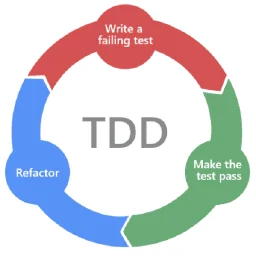
Senior-engineer coding standard for Bun/TypeScript, Next.js, and Java (Quarkus) repos. Enforces strict TDD (primary-port SUT, hand-written fakes, no mocks), Clean Architecture (`src/{domain,use-cases,infra,presenter,composition}`), `Result<T, E>` at IO boundaries, branded types at trust boundaries, Bun-only or Maven toolchains (no `class`/`function` declaration/`interface`/`console.*` in TS), Atomic Design, a logic-free design system (no Tailwind in app code), and production disciplines covering privacy (no PII in logs/URLs), tenant isolation, IO deadlines, soft-delete, expand-contract migrations, optimistic locking, observability, AI ports with evals, delivery, accessibility. Use for ANY code task in a Bun, Next.js, or Java repo, covering writing, scaffolding, testing, refactoring, review, React components, APIs, persistence, debugging, security. Consult even when conventions are not mentioned; rules are non-negotiable; violations are rewritten.

Analyze an influencer's audience demographics to determine whether their followers match your target customer, with a clear pass/fail verdict. This skill should be used when evaluating audience fit, checking influencer demographics, analyzing audience data, reviewing an audience breakdown, assessing demographic alignment, vetting an influencer's audience, determining if a creator's followers match your target demo, reviewing a platform export or stats screenshot, pasting influencer stats, grading audience quality, deciding whether an influencer's audience is a good fit, checking if this creator is worth it, running an audience report, comparing creator audiences, or evaluating audience overlap with target demo. For overall creator vetting beyond demographics, see creator-vetting-scorecard. For finding new creators, see creator-discovery.



Audit an existing Foldkit program against the architecture, conventions, and quality bar. Use when the user wants to review their Foldkit code, check for anti-patterns, accessibility gaps, or quality regressions. Triggers on phrases like "audit my app", "review this Foldkit code", "check for anti-patterns", "is this idiomatic?", or "what would the reviewer find?"

Audits a Rails app for tech debt, citing each finding to PoEAA, SOLID, or the Rails guides with file:line evidence and before/after code. Use when the user says "audit Rails tech debt", or when auditing Rails for anti-patterns, fat models or controllers, callback abuse, or N+1 queries. Not for over-engineering; use simplifying-ruby-code.

Autonomous cold email campaign launcher. Takes one target company domain, scrapes their website, generates an ICP with Claude, pulls matching leads via Prospeo, enriches emails + company descriptions, personalizes each lead with parallel Claude Code Task sub-agents (A/B/C variants), and uploads as a live Smartlead campaign. Uses local JSON files for state (no database required). Use for automated daily campaign launches after you have an initial `client-profile.yaml` from /icp-onboarding. Triggers on "auto-research", "launch an automated campaign", "daily campaign", "run the research loop".


Design and orchestrate multi-artifact Avonni solutions. MUST activate when a request spans more than one Avonni artifact type (Dynamic Component, Flow Screen Components, Experience site components) or describes a business use case rather than a single named artifact — e.g. a component plus the flow it launches. Do NOT use for a single artifact of a known type — use its skill directly.
Add, update, or remove Avonni Flow Screen Components inside a Salesforce flow. Use when the user wants Avonni components in a screen flow, when editing flow XML that contains avcmpbuilder extensions, or when creating a new screen flow built around Avonni components. Does not cover general flow logic (decisions, assignments, record operations). Do NOT use when the request spans multiple Avonni artifact types (e.g. the flow plus a dynamic component or portal page that launches it) — use the avonni-architect skill instead.
This skill helps an LLM generate correct AxGEPA optimization code using @ax-llm/ax. Use when the user asks about AxGEPA, GEPA, Pareto optimization, multi-objective prompt tuning, reflective prompt evolution, validationExamples, maxMetricCalls, or optimizing a generator, flow, or agent tree.

[Alpha] Experimental Azure environment builder for infrastructure and deployment design. Use when building Azure infrastructure, generating Bicep with AVM modules, deploying apps to App Service/AKS/Container Apps, designing Hub-Spoke/AKS/AI Foundry architectures, or creating low-cost Azure operations demos.

Build B2B reach systems that make a defined market aware of the company through named accounts, real buyers, controlled delivery channels, and first-touch saturation. Use when the right market may not know the company exists, outbound gets little signal, brand awareness is vague, the target market is too broad, or the team needs a concrete account list and reach plan.
Audit and rewrite B2B sales messaging so the right buyers quickly understand the painful problem, concrete outcome, and mechanism behind the offer. Use when buyers see the company but do not remember it, cannot explain what it does, do not connect it to a trigger, or messaging sounds clever, vague, over-complex, generic, or too simplified for the buyer's world.

Comprehensive backend development workflow that orchestrates expert analysis, architecture design, implementation, and deployment using the integrated toolset. Handles everything from API design and database architecture to security implementation and DevOps automation.

Use when writing BK-CI backend microservice code, such as adding a Resource, organizing API/Service/DAO layering, dependency injection, determining service ownership, and Spring Boot development conventions. Prefer this when the user is doing Kotlin/Java backend development.
New to MCP?
From what the protocol is to installing your first server, these answers cover most first questions.
An open protocol that defines how AI applications connect to external tools and data in a uniform way. Clients talk to the model; MCP servers provide tools, resources and prompt templates. They exchange standard messages, so one server can be reused by many clients.